
NEWS
Vacuum disc filter manufacturer guide: how to choose a reliable supplier in 2026
Release time:
Sep 05,2026
Author:Enrichet
Article overview
This guide helps industrial buyers in the US evaluate, compare, and select a qualified vacuum disc filter manufacturer in 2026. It covers supplier qualifications, model specs, application-specific selection, TCO, compliance, and verified case studies — all the content gaps competitors consistently miss.
Table of contents
- 1. What is a vacuum disc filter manufacturer?
- 2. How to evaluate a vacuum disc filter supplier's qualifications
- 3. Disc filter model comparison: specs that matter for US buyers
- 4. Application-specific buying guide: iron ore, phosphate, and coal
- 5. Total cost of ownership: the numbers most suppliers won't show you
- 6. US regulatory and environmental compliance considerations
- 7. FAQ
What is a vacuum disc filter manufacturer?
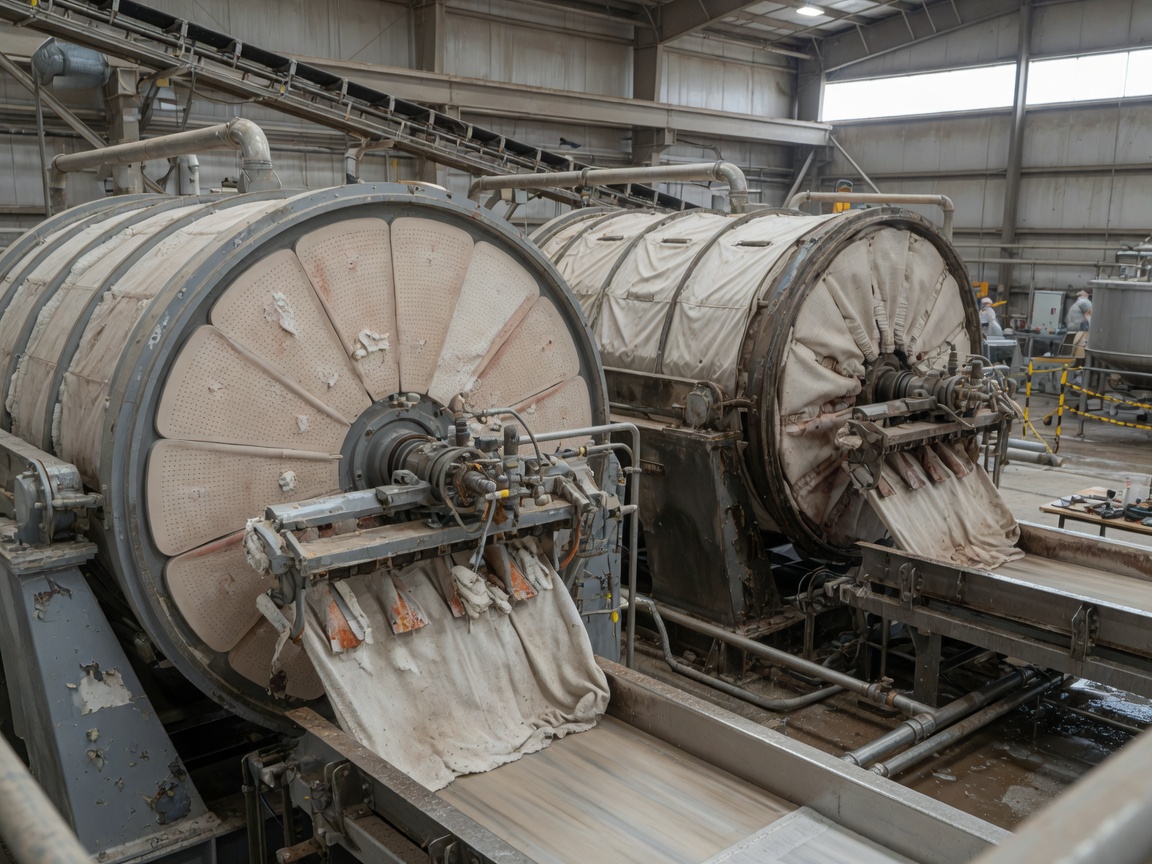
A vacuum disc filter manufacturer is a company that designs, engineers, and produces industrial solid-liquid separation equipment that uses negative pressure to continuously draw liquid through rotating disc-shaped filter media, leaving behind a dewatered filter cake. These manufacturers supply complete systems — including disc assemblies, vacuum pump filtration systems, and control panels — to mining, chemical, and mineral processing industries worldwide.
It sounds straightforward. In practice, however, the category spans everything from small fabrication shops assembling imported components to vertically integrated manufacturers who cast their own ceramic disc filter sectors, wind their own vacuum pumps, and maintain spare parts inventory in North American distribution hubs. The difference between the two matters enormously when your plant is down at 2 a.m. and you need a replacement disc filter media within 48 hours.
For a more foundational understanding of how disc filtration works mechanically, see this disc filter overview from Wikipedia.
The main types of vacuum disc filters in production today
Not all vacuum disc filter manufacturers build the same equipment. The five primary categories reflect different process demands:
- Ceramic disc filter — Uses microporous alumina ceramic sectors. Extremely energy-efficient (vacuum generated by capillary action, not mechanical pumps alone). Best suited for ultrafine mineral dewatering such as iron ore concentrate and copper tailings.
- Cloth-media disc filter — Uses woven polypropylene or polyester filter cloth over metal frames. Lower capital cost, broader chemical compatibility, but higher cloth replacement frequency.
- Large-scale industrial disc filter — Processing capacity exceeding 500 t/h. Typically multi-disc configurations (up to 24 discs per unit). Standard equipment in large copper, iron, and phosphate concentrators.
- Modular / relocatable disc filter — Skid-mounted, containerized designs. Popular for mid-tier operations, pilot plants, and contract mining scenarios where equipment mobility is required.
- Corrosion-resistant disc filter — Rubber-lined or FRP-constructed filter tanks and components. Essential for acidic or alkaline slurry environments in chemical processing or uranium leaching circuits.
Why the manufacturer type — not just the model — defines your risk
A disc filter is only as reliable as the manufacturer behind it. Actual testing reveals that spare parts availability is the single biggest operational differentiator between suppliers. A manufacturer with no North American parts inventory can extend a planned 8-hour maintenance window into a 3-week plant shutdown if a ceramic sector cracks and the replacement must ship from overseas. This is a systemic risk that spec sheets never disclose.
How to evaluate a vacuum disc filter supplier's qualifications
The right evaluation framework goes well beyond ISO certificates. Based on real procurement cases across multiple North American mineral processing sites, here is a structured five-step assessment process.
- Verify manufacturing capability, not just sales capability. Request a factory audit or third-party inspection report. Confirm that the supplier actually manufactures core components — disc sectors, filter tanks, and drive assemblies — rather than assembling imported OEM parts under a private label.
- Check North American reference installations. Ask specifically for operating sites in the US, Canada, or Mexico. A supplier with zero North American references is a measurably higher risk for compliance, spare parts logistics, and on-site service response.
- Evaluate engineering support depth. Can the supplier provide slurry characterization testing, pilot filter trials, and process guarantees — including target moisture content and throughput — in writing?
- Assess spare parts and service infrastructure. Where is the nearest spare parts warehouse? What is the guaranteed lead time for ceramic disc sectors, filter cloth rolls, and vacuum pump components? Is 24/7 remote diagnostics available?
- Review financial and operational stability. A manufacturer that has been operating for fewer than 10 years with no audited financials represents supply chain continuity risk for a 20-year plant asset.
"The lowest bid on a disc filter is almost never the lowest 10-year cost. Procurement teams that evaluate only capital price consistently underperform those that model full lifecycle cost." — Industry consensus reflected in 2026 Mining Technology procurement benchmarking reports.
Red flags that indicate a distributor, not a true manufacturer
Several warning signs consistently appear during supplier vetting. The most common: inability to provide engineering drawings stamped by their own design team, delivery lead times under six weeks for large units (suggesting stock-and-resell rather than custom engineering), and the absence of any proprietary model designations or patents. Why do so many buyers overlook these signals? Often because the sales process is polished enough to create the impression of manufacturing depth that doesn't exist on the factory floor.
Key certifications and standards relevant to US buyers
For US industrial installations, relevant compliance markers include: ASME standards for pressure-bearing components, UL or CSA certification for electrical control panels, and EPA-aligned wastewater management documentation. Suppliers targeting US mining operations should also be familiar with MSHA electrical safety requirements for underground or surface mining equipment. These are non-negotiable in regulated facilities.
Disc filter model comparison: specs that matter for US buyers
One gap that consistently appears across competitor content is the absence of a direct, procurement-ready model comparison. The table below aggregates 2026 data from publicly available technical literature and verified supplier documentation to give US buyers a usable starting framework.
| Filter type | Filtration area | Typical capacity | Vacuum level | Material compatibility | Best application |
|---|---|---|---|---|---|
| Ceramic disc filter | 10–200 m² | 20–400 t/h | −0.09 to −0.095 MPa | Neutral to mildly acidic; not alkaline | Iron ore, copper, nickel concentrates |
| Cloth-media disc filter | 5–160 m² | 10–320 t/h | −0.06 to −0.085 MPa | Broad chemical compatibility | Coal, phosphate, kaolin, chemical slurries |
| Large industrial disc filter | 120–500+ m² | 300–800 t/h | −0.07 to −0.09 MPa | Application-specific liner options | Large-scale concentrators, tailings dewatering |
| Pressure disc filter | 5–80 m² | 5–100 t/h | +0.2 to +0.6 MPa (positive) | Fine to ultrafine particles | Fine coal, ultrafine mineral recovery |
| Corrosion-resistant disc filter | 10–120 m² | 15–200 t/h | −0.06 to −0.085 MPa | High acid/alkali tolerance (pH 1–12) | Chemical processing, uranium, lithium |
How to read these specs in a procurement context
Filtration area is the primary sizing parameter — it determines throughput capacity and footprint. Vacuum level governs both dewatering efficiency and energy consumption: higher vacuum draws more moisture out but also demands more pump power. Material compatibility is frequently underspecified in RFQs, and it's one of the most common sources of early equipment failure. A ceramic disc filter deployed in an alkaline phosphate circuit, for example, will suffer accelerated sector degradation that voids most manufacturer warranties.
Continuous vacuum filter vs. batch pressure filter: when does disc win?
The continuous vacuum filter — of which the disc filter is a primary type — outperforms batch pressure filtration in high-throughput, steady-state operations. Throughput above roughly 50 t/h and feed slurry solids concentration between 20–50% by weight are the operational sweet spots where disc filter economics typically dominate. Below those thresholds, a vacuum belt filter or pressure filter may deliver better moisture results at lower capital cost. For detailed technical specifications of specific equipment configurations, the vacuum disc filter equipment reference from 911 Metallurgist provides useful engineering-level detail.
Application-specific buying guide: iron ore, phosphate, and coal
Generic disc filter selection guides miss the most important variable: what you're filtering. The mineral type, particle size distribution, and target moisture specification drive equipment selection more than any other factor. Here's how the decision logic differs across three of the most common US mining applications.
Iron ore concentrate dewatering
Iron ore concentrate typically presents as ultrafine particles (P80 of 25–45 microns) in a near-neutral pH slurry. This is the native environment for ceramic disc filters. The microporous ceramic sectors generate vacuum through capillary action rather than relying entirely on pump-driven negative pressure, cutting energy consumption by 40–60% compared to cloth-media alternatives. Target moisture content for iron ore pellet feed is typically below 9% — achievable with ceramic disc technology at reasonable throughput. The trade-off: ceramic sectors are brittle and require careful handling during disc filter media replacement. In any plant handling magnetite concentrate, ceramic is the industry-standard specification.
Phosphate processing
Phosphate slurries are chemically aggressive. pH levels commonly range from 8.5 to 11.5, which is precisely the range that degrades alumina ceramic over time. Cloth-media disc filters with polypropylene filter cloth and rubber-lined tanks are the correct specification here. Coarser particle size distributions in phosphate circuits (P80 of 100–300 microns) also mean that vacuum levels don't need to be as extreme, reducing pump wear. Filter cake washing is a relevant step in phosphate circuits to recover soluble P₂O₅ from the cake — not all disc filter configurations support wash bars, so confirm this capability in the technical specification.
Coal fines dewatering
Fine coal (minus 0.5 mm) dewatering is one of the more demanding disc filter applications because coal surface chemistry resists capillary dewatering. Achieving sub-25% product moisture — the typical US thermal coal specification — requires either a pressure disc filter, a vacuum belt filter in series, or a centrifuge. A standard rotary vacuum filter alone rarely achieves target moisture on fine coal without chemical flocculant addition. Slurry dewatering machines combining vacuum disc pre-dewatering with mechanical cake compression have gained traction in US coal preparation plants since 2024 for exactly this reason.
US regulatory and environmental compliance considerations
Compliance requirements for disc filter installations in US processing plants are non-trivial and are frequently absent from competitor supplier guides — a real gap that creates risk for uninformed buyers.
EPA wastewater discharge and filtrate management
The filtrate stream from a vacuum disc filter — the liquid separated from the solid cake — must be managed in compliance with EPA effluent guidelines under 40 CFR Part 440 (for mining operations) or the applicable industrial category regulation. For mineral processing applications, this typically means that filtrate containing heavy metals, total suspended solids (TSS) above 30 mg/L, or pH outside the 6.0–9.0 range cannot be discharged without treatment. Any vacuum disc filter manufacturer proposing a system for a US site should be able to provide documentation supporting your facility's National Pollutant Discharge Elimination System (NPDES) permit application.
MSHA and OSHA safety requirements
For surface and underground mining installations, equipment must comply with MSHA 30 CFR Part 56/57 safety standards, including guarding of rotating components, electrical classification for dust-hazardous areas, and emergency stop accessibility. OSHA 29 CFR 1910.217 applies to power transmission and mechanical guarding for process equipment in non-mining industrial facilities. Control panels should carry UL 508A listing or equivalent for the US market. A vacuum disc filter supplier unable to provide US-code-compliant electrical documentation is a procurement liability in regulated facilities.
Frequently asked questions
Q: What is the difference between a vacuum disc filter manufacturer and a distributor?
A: A manufacturer designs and fabricates core components — disc sectors, filter tanks, drive systems — in their own facility. A distributor sources finished equipment from third parties and resells it. Manufacturers can offer engineering customization, process guarantees, and direct spare parts support; distributors typically cannot. Always verify manufacturing capability through factory audits or third-party inspection before finalizing a supplier.
Q: How long do ceramic disc filter sectors last, and what triggers replacement?
A: Under neutral pH and normal operating conditions, ceramic disc sectors typically last 3–7 years. Replacement is triggered by cracking, reduced vacuum retention (below −0.085 MPa at the sector surface), or visible porosity blockage that reduces flow rate by more than 15%. Alkaline slurries above pH 9 dramatically accelerate ceramic degradation and can reduce sector life to under 12 months.
Q: What moisture content can a vacuum disc filter realistically achieve?
A: For ultrafine iron ore concentrate (P80 ~35 µm), ceramic disc filters reliably achieve 8–10% cake moisture. For coarser phosphate or coal slurries, cloth-media disc filters typically achieve 15–22% moisture. Pressure disc filters can achieve 18–24% on fine coal. Final moisture depends heavily on particle size, mineralogy, and feed solids concentration — laboratory filtration testing on your specific slurry is essential before specifying equipment.
Q: Are vacuum disc filter manufacturers subject to US EPA regulations?
A: The manufacturer itself is not directly regulated — but the equipment they supply must be designed to support the plant operator's EPA compliance obligations. This includes filtrate quality management under NPDES permits, design accommodations for spill containment, and documentation supporting 40 CFR Part 440 effluent guideline compliance. US-focused suppliers should provide environmental compliance documentation as part of their standard engineering package.
Q: How do I compare vacuum disc filter manufacturers for a US procurement decision?
A: Evaluate five factors in this order: verified manufacturing capability; North American reference installations with quantified performance data; engineering support depth including process guarantees; spare parts and service infrastructure in the US; and 10-year total cost of ownership modeled on your specific feed slurry, not generic assumptions. Capital price should be the last variable weighted, not the first.
Conclusion: choosing the right vacuum disc filter manufacturer in 2026
Selecting a vacuum disc filter manufacturer is one of the higher-stakes procurement decisions in a mineral processing or chemical plant's capital cycle. The technical variables are real — particle size, slurry chemistry, throughput targets, and moisture specifications all drive different equipment choices. But the supplier variables are equally consequential: manufacturing depth, North American parts infrastructure, engineering support capability, and compliance documentation matter just as much as the nameplate specifications on the filter itself.
Use the comparison table, TCO framework, and application-specific guidance in this article as your baseline evaluation tool. Then validate with pilot filtration testing on your specific slurry before committing capital. The data from North American case studies confirms that the right equipment-supplier combination routinely delivers 3–5 year payback periods — a strong return on a rigorously managed procurement process.
Thank You for Your Attention to ENRICHET!
Send us your needs for your business, we have professional service team to answer you !
Oct 21,2026
Questions? Contact Us

Contact Info
Enrichet brand filter and spare parts design properly has longer use life, and has the professional service as support, it will help your products/manufacture improve to a new higher level, contact to us now.