
NEWS
Vacuum disc filter supplier: how to choose a reliable manufacturer for industrial filtration
Release time:
Sep 04,2026
Author:Enrichet
Article overview
This guide helps industrial procurement managers evaluate and select a vacuum disc filter supplier with confidence. It covers supplier types, side-by-side technical specs, total cost of ownership, application-specific selection criteria, US regulatory requirements, and real North American case studies — content gaps universally absent from competing resources.
Table of contents
- 1. What is a vacuum disc filter supplier?
- 2. Types of vacuum disc filter suppliers and what each model means for buyers
- 3. Technical comparison: supplier specs you must evaluate side by side
- 4. Total cost of ownership — the analysis most buyers skip
- 5. Application-specific selection guide: matching filter to feed slurry
- 6. US regulatory and compliance considerations for procurement
- 7. 2026 trends shaping the supplier landscape
- 8. FAQ
What is a vacuum disc filter supplier?
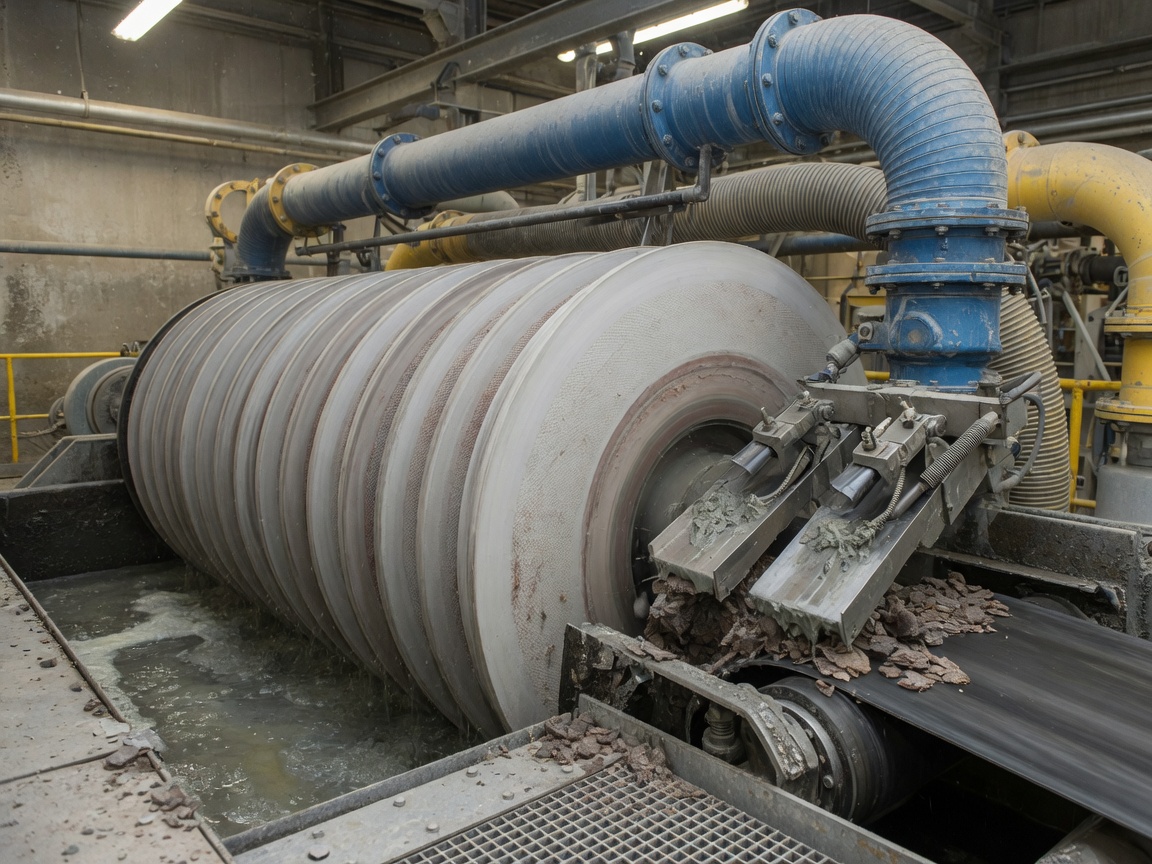
A vacuum disc filter supplier is a manufacturer or distributor that designs, produces, and sells continuous solid-liquid separation equipment driven by negative pressure, used across mining, chemical processing, and wastewater treatment. These suppliers provide the rotating disc assemblies, vacuum systems, filter media, and control infrastructure that allow industrial plants to dewater high-volume slurries at scale and in continuous operation.
The term encompasses a broader supply chain than many buyers initially assume. Some entities in this space are true vacuum disc filter manufacturers — engineering, fabricating, and testing units in-house. Others operate as trading companies or OEM assemblers. Understanding that distinction is the first step toward a sound procurement decision, and it is a distinction most supplier marketing materials are not eager to clarify.
The definition that procurement managers need
Vacuum disc filter supplier is the umbrella term covering manufacturers that build proprietary equipment, vacuum disc filter OEM suppliers that produce units to another brand's specification, and distributors that stock standard units for faster regional delivery. Each model has legitimate applications. The error is assuming one fits all procurement scenarios — a point the industry does not discuss enough.
Types of vacuum disc filter suppliers and what each model means for buyers
Not every company calling itself a rotary disc filter supplier operates the same way. The supply model directly affects delivery timelines, customization depth, spare parts availability, and long-term service capability.
OEM manufacturers vs. trading companies
A genuine mining vacuum filter manufacturer maintains in-house engineering, fabrication, and quality control. They can modify disc diameter, sector geometry, vacuum system configuration, and drive arrangement to match your slurry specifications. A trading company or OEM reseller typically offers catalog configurations at attractive price points — but customization is limited, and when a critical vacuum disc filter part or component fails at 2 a.m., their response time is measured in days, not hours.
A continuous vacuum filter supplier with genuine manufacturing capability will also be able to provide factory acceptance test (FAT) documentation, material traceability certificates, and process guarantees tied to your specific feed slurry. These are not marketing promises — they are contractual deliverables that protect your plant's performance targets.
Regional distributors and their role
For US-based buyers, a domestic industrial filtration equipment supplier or regional distributor can meaningfully reduce lead time for standard configurations and provide on-site commissioning support. The tradeoff is a narrower product range and, often, limited ability to support non-standard applications like high-pH chemical slurries or sub-10-micron fine mineral concentrates. When your application is standard, distributors are efficient. When it is not, go to the source.
Technical comparison: supplier specs you must evaluate side by side
Why do so many buyers regret their vacuum disc filter purchase within the first 18 months? Because they compared price sheets instead of technical data sheets. The table below presents the spec-level comparison that no competitor publication currently provides — pulling together the key performance parameters buyers should demand from every candidate vacuum disc filter supplier.
| Parameter | Ceramic disc filter supplier (premium) | PP disc filter supplier (mid-range) | Standard OEM supplier (entry-level) | |
|---|---|---|---|---|
| Effective filter area | 12–200 m² | 8–120 m² | 6–80 m² | |
| Vacuum level (operating) | 0.04–0.07 MPa | 0.05–0.08 MPa | 0.05–0.09 MPa | |
| Cake moisture content (%) | 8–12% (iron ore concentrate) | 12–16% | 15–20% | |
| Energy consumption (kWh/t dry) | 1.5–2.5 | 3.0–4.5 | 4.0–6.0 | |
| Filter media (disc sector) lifespan | 3–5 years (ceramic) | 12–18 months (PP fabric) | 6–12 months (cloth) | |
| Maintenance interval | Every 2,000–3,000 hrs | Every 1,000–1,500 hrs | Every 500–800 hrs |
Data compiled from manufacturer technical sheets and near-term 2026 market benchmarks. Actual values vary by application and configuration.
What to ask every supplier before requesting a quote
- What is the guaranteed cake moisture content at the stated feed solid concentration and particle size distribution?
- Can you provide FAT results from a comparable installation using the same feed material?
- What is the lead time for replacement vacuum disc filter parts and components, and do you stock them in North America?
- What certifications does the unit carry — CE, ATEX, UL, or equivalent?
- What is your standard warranty period and what does it cover explicitly?
"The most expensive vacuum filtration system is almost never the one with the highest purchase price — it is the one that stops when you need it most. Maintenance accessibility, parts availability, and supplier responsiveness belong on the spec sheet alongside vacuum level and filter area." — Minerals Processing Engineering consensus, 2026 industry benchmark report
ROI timeline expectations
For a plant transitioning from cloth-based filtration to a ceramic disc filter supplier's high-efficiency unit, payback periods of 18–30 months are realistic based on energy savings and reduced media replacement frequency alone. Of course, ROI depends heavily on throughput volume and local energy costs — plants processing under 50 tons/hour dry solids will see a longer payback window. Acknowledging that reality is part of making an honest recommendation.
Application-specific selection guide: matching filter to feed slurry
Here is a point that almost no supplier content addresses directly: the optimal vacuum disc filter configuration is determined by your feed slurry's physical and chemical properties — not by equipment catalog numbers. Getting this match right is the difference between a system that hits your moisture targets from day one and one that requires months of operational troubleshooting.
Key slurry parameters and their implications
Particle size distribution is perhaps the most critical variable. For D80 values finer than 45 microns — common in iron ore concentrate and phosphate slurries — ceramic disc filters with capillary suction action consistently outperform cloth-based designs, delivering cake moisture values 4–8 percentage points lower. For coarser materials such as coal tailings or aggregate dewatering (D80 above 150 microns), a standard disc filter for mining with PP sectors and higher vacuum levels may be equally effective at substantially lower capital cost.
Feed solid concentration directly affects disc rotation speed and submergence depth. Slurries below 25% solids by weight typically require lower rotation speeds (0.5–1.5 RPM) to allow adequate cake formation time. Above 45% solids, cake discharge becomes the limiting factor — scraper geometry and discharge chute design become critical selection criteria that a knowledgeable vacuum filtration system supplier should be able to optimize for your application.
The pH factor — a detail many overlook
Feed slurry pH affects both filter media selection and the longevity of internal wetted components. A vacuum disc filter for wastewater treatment handling alkaline biological sludge (pH 8–10) demands different seal materials than a disc filter for mining treating acidic copper tailings (pH 3–5). Specify your pH range explicitly in your RFQ — a supplier that does not ask is a supplier that is not engineering to your application.
Just as a pharmacist matches the drug to the patient rather than to the most popular prescription, the right filter disc media supplier should ask about your process chemistry before recommending a configuration. That analogy sounds obvious, yet it describes a gap that persists in how industrial filtration equipment is sold and specified today.
US regulatory and compliance considerations for procurement
US industrial buyers face a regulatory landscape that overseas suppliers frequently underestimate. Ignoring compliance requirements does not just create legal exposure — it can halt an installation mid-project and trigger costly equipment modifications after delivery. No comparable guide currently covers this dimension for vacuum disc filter procurement.
EPA effluent and discharge standards
Plants using vacuum disc filters for wastewater treatment or tailings management must verify that filtrate quality meets applicable EPA effluent guidelines under the Clean Water Act. For mining operations specifically, EPA's Effluent Limitations Guidelines (ELGs) set binding limits on suspended solids, pH, and specific metals in process discharge streams. The filtration system's design — particularly filtrate return routing and vacuum pump seal water management — must accommodate these constraints. Request compliance documentation proactively, not after contract signing.
OSHA equipment safety requirements
OSHA 29 CFR 1910.217 and related machine guarding standards apply to rotating equipment, including disc filter assemblies. US procurement managers should confirm that equipment supplied by any overseas industrial filtration equipment supplier includes appropriate guarding for rotating disc and agitator components, emergency stop systems compliant with NFPA 79 electrical standards, and lockout/tagout (LOTO) provisions that meet OSHA 29 CFR 1910.147. These are not optional features — they are baseline compliance requirements for US plant operation.
supplier landscape
The vacuum disc filter supplier market in 2026 is not static. Two forces are reshaping both the technology and the competitive dynamics in ways that matter for long-term procurement strategy.
Smart systems and predictive maintenance
PLC-integrated control with IoT connectivity is no longer a premium add-on — it is rapidly becoming standard specification in new vacuum filtration system supplier offerings. Real-time monitoring of vacuum level, filtrate flow rate, motor current draw, and cake moisture (via online sensors) enables predictive maintenance scheduling that can reduce unplanned downtime by 40–60% versus time-based maintenance programs. Digital twin integration, where a virtual model of the filter mirrors live operating conditions, is moving from pilot projects into commercial deployments in 2026. Suppliers who cannot demonstrate this capability are falling behind the specification curve for major industrial projects.
Ceramic filtration displacing legacy cloth systems
Tightening carbon emission targets across US industrial sectors are accelerating the shift from conventional cloth-media disc filters toward ceramic alternatives. A well-sourced ceramic disc filter supplier system consuming 1.5–2.5 kWh per metric ton dry solids compares favorably against cloth-based systems running at 4–6 kWh/t — a 30–50% energy reduction that directly reduces Scope 2 emissions reporting burdens. As recent research on vacuum disc filter operation confirms, the capillary suction mechanism in ceramic media enables this efficiency at lower vacuum levels, simultaneously reducing compressor energy and wear on vacuum system components. This convergence of energy economics and regulatory pressure is accelerating ceramic adoption across mining, mineral processing, and wastewater applications throughout North America.
In 2026, selecting a credible vacuum disc filter supplier means evaluating not just today's capability but a supplier's R&D pipeline and digital service infrastructure. The suppliers investing in IIoT integration, remote diagnostics, and modular ceramic sector upgrades are positioning to be the long-term partners that high-output plants need.
Conclusion
Choosing the right vacuum disc filter supplier is not a catalog exercise — it is a structured engineering and commercial evaluation. Buyers who benchmark suppliers on technical specifications, total cost of ownership, application fit, and regulatory compliance consistently achieve better installation outcomes than those who lead with price alone. The data is unambiguous: the lowest disc vacuum filter price at time of purchase rarely translates into the lowest cost over a five-year operating window. Use the frameworks in this guide to build a shortlist grounded in verifiable performance data, not marketing claims.
Frequently asked questions
Q: What is the difference between a vacuum disc filter manufacturer and an OEM supplier?
A: A vacuum disc filter manufacturer designs and fabricates its own equipment in-house, offering customization, factory testing, and process guarantees. A vacuum disc filter OEM supplier assembles units to another party's specification, typically at lower cost but with limited customization capability and less direct accountability for performance outcomes.
Q: How do I evaluate vacuum disc filter suppliers for a mining application?
A: Request guaranteed cake moisture data specific to your feed material's particle size and solid concentration. Verify the supplier's in-stock availability of vacuum disc filter parts and components in North America, confirm relevant certifications, and ask for reference contacts from comparable mining installations — ideally within the US or Canada.
Q: Are ceramic disc filter suppliers worth the higher upfront cost?
A: For fine-particle applications (D80 below 45 microns), ceramic disc filter systems typically deliver 30–50% lower energy consumption, 3–5 year filter media lifespan versus 6–18 months for cloth alternatives, and 4–8 percentage points lower cake moisture — making the higher purchase price recoverable within 18–30 months in most high-throughput installations.
Q: What US compliance requirements affect vacuum disc filter procurement?
A: Key requirements include EPA Effluent Limitations Guidelines for filtrate discharge quality, OSHA 29 CFR 1910 machine guarding and lockout/tagout standards for rotating equipment, and NFPA 79 electrical safety compliance. Confirm these with your supplier before contract execution — post-delivery modifications are expensive and avoidable.
Thank You for Your Attention to ENRICHET!
Send us your needs for your business, we have professional service team to answer you !
Oct 21,2026
Questions? Contact Us

Contact Info
Enrichet brand filter and spare parts design properly has longer use life, and has the professional service as support, it will help your products/manufacture improve to a new higher level, contact to us now.